The Ultimate Guide to Designing Transparent Animated Stickers for Messaging Apps
Best practices for alpha channel matte borders, keyframe pacing, and expressive micro-animations that pop across dark and light modes.


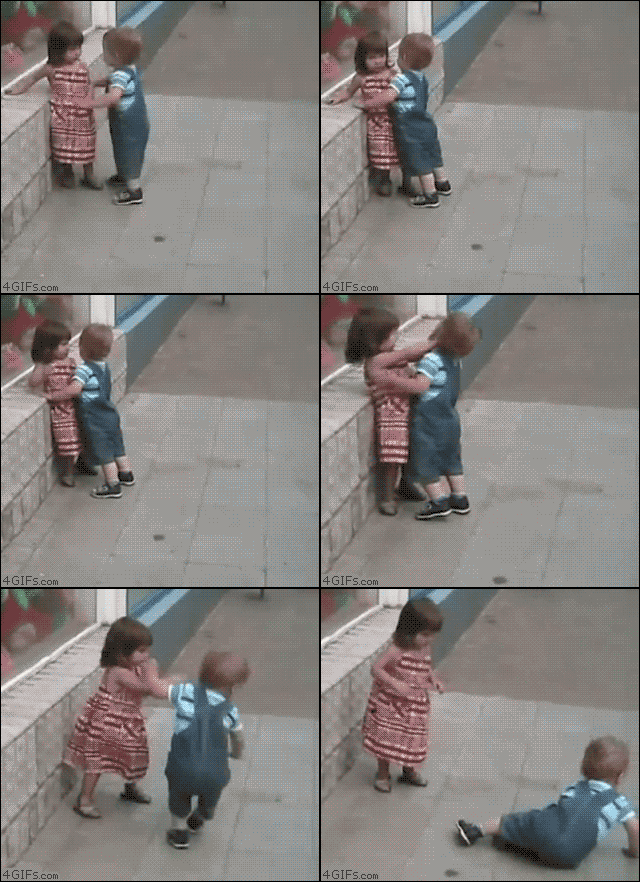
In the contemporary digital messaging ecosystem, transparent animated stickers have transformed from simple playful accents into a dominant visual language across platforms like WhatsApp, Telegram, Discord, and Instagram Stories. Unlike traditional rectangular GIFs that enclose their visual narrative inside a rigid cinematic frame, stickers interact directly with the conversational surface. Because they float organically over diverse backgrounds, varied wallpaper textures, and dynamic dark/light interface themes, designing an animated sticker requires a specialized blend of motion discipline, alpha channel mastery, and silhouette psychology.
The foundational design rule of professional sticker creation is the contrast stroke, colloquially known as the sticker white border. When a character or animated graphic is rendered with dark outlines or transparent gradients, placing it against a dark mode chat bubble causes the artwork to disappear or bleed awkwardly into the interface. Conversely, light-colored elements vanish on clean white backgrounds. Adding a consistent, solid 2-to-4-pixel white or contrasting outline with a subtle 10% ambient drop shadow creates an impermeable visual boundary, guaranteeing that the sticker maintains crisp silhouette definition regardless of the recipient's personal display preferences.
Pacing and keyframing in micro-animation require a distinct artistic philosophy. In traditional film animation, elaborate anticipation and slow follow-through establish physical weight. In sticker design, however, animations must communicate their emotional punchline within a window of 12 to 36 frames (typically between 1 and 2.5 seconds). Successful designers rely on exaggerated 'snappy' cartoon physics: quick three-frame anticipations followed by explosive bursts of secondary motion—such as fluttering hair, wobbling antennas, or bouncy squash-and-stretch impacts. The loop boundary must be mathematically imperceptible; cyclical rotations, swinging pendulums, or breathing idle postures provide ideal foundational motifs for perpetual looping.
Finally, technical file optimization is critical. While modern formats like APNG, WebP, and WebM support full 8-bit alpha transparency, mobile messaging platforms enforce strict file payload caps (often 500KB or less per sticker). Animators must eliminate unnecessary transparent padding around the bounding box, limit total frame counts by animating on 'twos' (12 fps within a 24 fps timeline), and optimize color palettes. By mastering these principles, designers craft vibrant, lightweight animated stickers that feel alive, responsive, and effortlessly communicative in the palm of millions of users.
Written by Sora Takahashi
Lead Motion Designer & UI Animator at gifzo.lol. Specializing in internet aesthetics, digital art history, and visual communication.