Stickers vs GIFs: How Alpha Transparency Created a New Visual Layer on the Web
The technical and cultural shift from rectangular video cutouts to transparent digital overlays in modern chat culture.


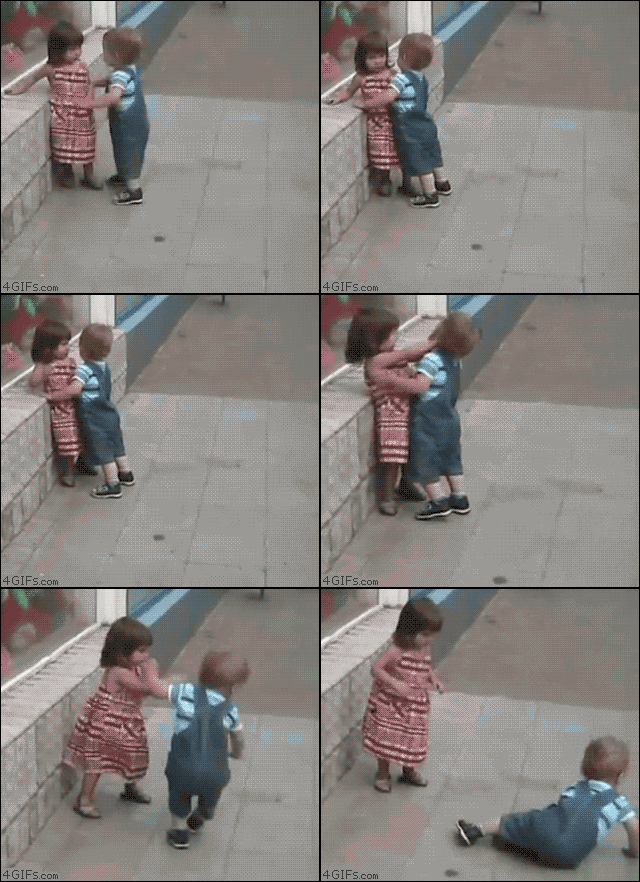
To casual internet users, the distinction between an animated GIF and a digital sticker might seem trivial: both are looping visual animations shared across social messaging platforms. Yet from both an engineering perspective and a communicative standpoint, stickers represent a profound evolutionary leap. While standard GIFs are rectangular windows that enclose their subject within a fixed cinematic frame, stickers strip away the background entirely, releasing the character, object, or text effect to interact directly with the conversational canvas.
The secret behind this visual liberation is the alpha channel—an additional data layer dedicated exclusively to transparency. In the original CompuServe GIF89a standard, transparency was strictly binary: a single palette index could be designated as 100% transparent or 100% opaque. This limitation produced notorious 'fringing' or 'halo' artifacts—jagged pixel edges around rounded characters when placed on backgrounds of different colors. Modern sticker formats utilize 8-bit alpha channels (found in APNG, WebP, and WebM), which provide 256 gradations of semi-transparency. This enables silky smooth anti-aliased edges, realistic drop shadows, and glowing neon effects that blend organically into any underlying interface theme.
Culturally, this transparency transforms how visual media functions in human conversation. A rectangular GIF feels like quoting an external television broadcast or movie scene—it occupies its own dedicated message bubble and temporarily interrupts the conversational flow. A transparent sticker, however, acts as a visual accessory or augmentative annotation. It can be stamped directly onto a friend's photo, pinned to a specific word inside a chat thread, or animated across a video story. It behaves not as a separate document, but as dynamic visual slang integrated into the fabric of the discussion.
As augmented reality (AR) lenses and spatial interfaces expand into mainstream everyday computing, the transparent sticker paradigm is rapidly superseding rectangular media. Digital interaction is shifting from looking 'at' rectangular screens to interacting 'within' immersive visual spaces. In this spatial future, the lessons learned from transparent stickers—compositing, emotional expressiveness, and respectful integration with user-generated content—will define how digital graphics enrich our physical reality.
Written by Dr. Aris Thorne
Cognitive Media Psychologist at gifzo.lol. Specializing in internet aesthetics, digital art history, and visual communication.