Digital Folklore: How Internet Communities Archive Ephemeral Media in Looping Formats
Examining how online subcultures preserve forgotten television clips, viral blips, and grassroots culture through perpetual animation.


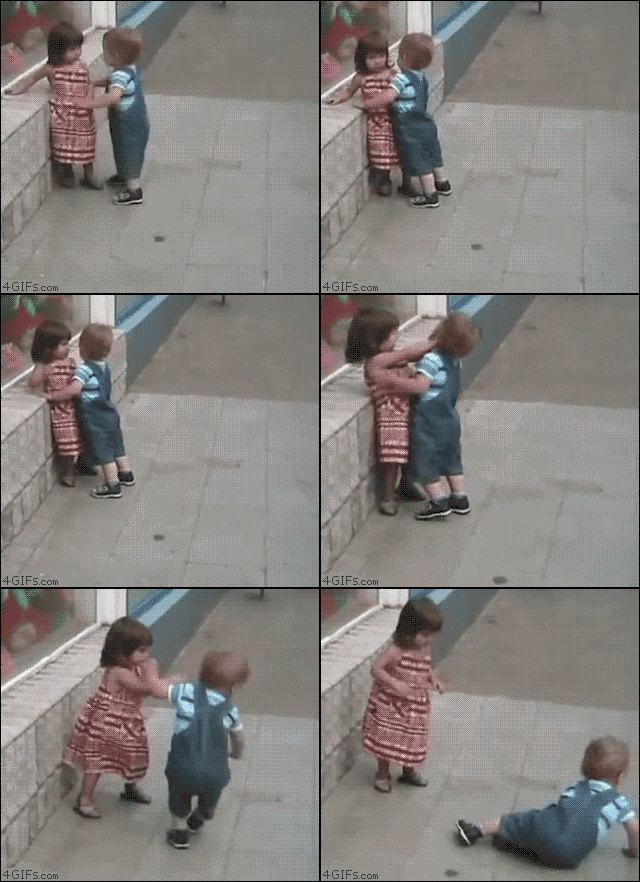
Before the advent of printing presses and digital media archives, human folklore survived through the oral tradition: stories, ballads, and cultural idioms passed from generation to generation by word of mouth, constantly mutating and adapting to new social contexts. In the twenty-first century, internet folklorists argue that the animated GIF has become the modern digital equivalent of the oral folk tale—a decentralized, collaborative repository of collective human memory.
Consider where the visual raw material of loop culture originates. While many reaction loops derive from blockbuster Hollywood films or mainstream sitcoms, an extraordinary percentage is salvaged from the forgotten peripheries of media history: 1980s local public-access television broadcasts, obscure Japanese commercials, discontinued Soviet educational animations, VHS workout tapes, and fleeting, user-uploaded video blips that vanished from their original host servers over a decade ago.
By excising a three-second snippet from an abandoned 1992 infomercial, converting it into a silent loop, and distributing it across decentralized chat networks, internet users rescue ephemeral audiovisual artifacts from permanent digital oblivion. In the process, the snippet is stripped of its original commercial context and transformed into a timeless folk archetype: the baffled host becomes 'The Confused Worker', the awkward pet becomes 'The Reluctant Accomplice', and the malfunctioning appliance becomes 'Monday Morning'.
Unlike closed, proprietary video platforms that routinely take down media due to platform deprecation or link rot, the GIF format is open, standard, and universally transportable. A GIF saved to a user's phone in 2012 remains 100% viewable on a browser in 2026 without requiring plugins, legacy software, or active server authorization. It lives in the decentralized vaults of community chats, private hard drives, and independent cultural archives like GIFZO. Looping media does not merely capture fleeting moments of internet amusement—it preserves the living, breathing emotional tapestry of digital civilization.
Written by Kira Naoko
Digital Folklorist & Archival Researcher at gifzo.lol. Specializing in internet aesthetics, digital art history, and visual communication.