Cinemagraphs in Commercial Design: The Subtle Art of Living Stillness
How luxury brands, editorial publications, and interface designers use isolated motion to captivate human gaze.


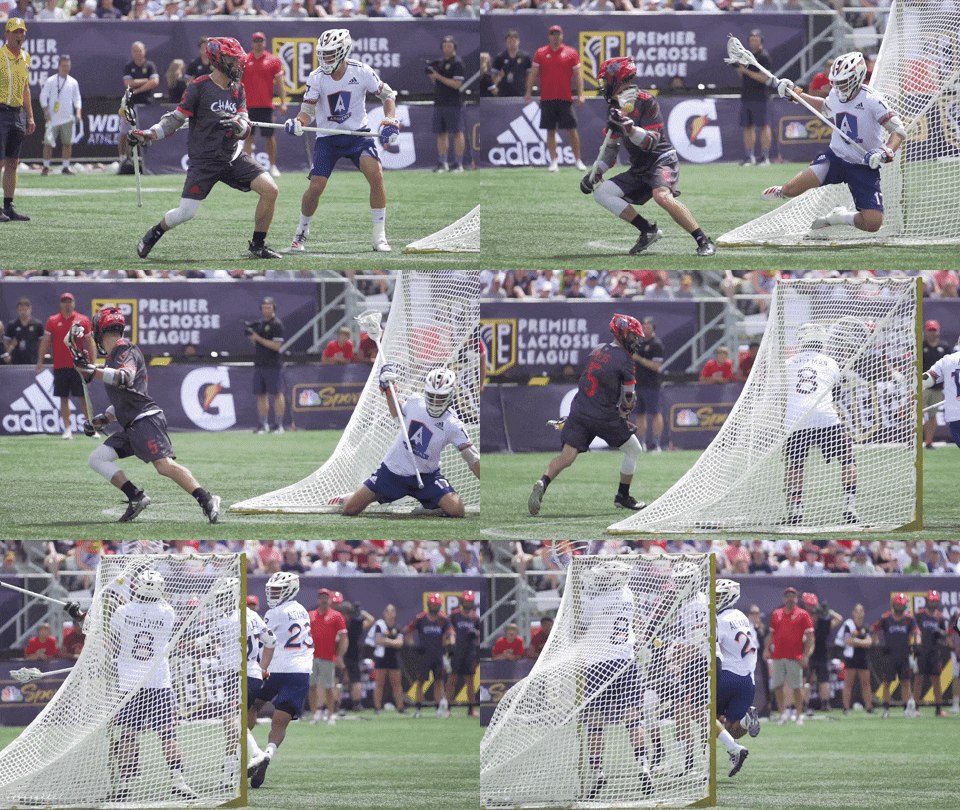
In an attention economy dominated by frantic flashing advertisements and hyperactive video sequences, consumers have developed visual defense mechanisms: banner blindness, rapid scrolling, and ad-skipping reflexes. In response, high-end luxury fashion houses, automotive marques, and contemporary editorial publications have turned toward an understated visual medium that operates in direct opposition to chaos: the cinemagraph.
Coined in 2011 by fashion photographer Jamie Beck and graphic artist Kevin Burg, a cinemagraph is more than an animated GIF or a trimmed video loop. It is fundamentally a living photograph. In a traditional motion clip, camera shake, background figures, and ambient environment are all in continuous flux. A cinemagraph, by contrast, freezes 95% of the visual composition into immobility. Only a solitary, deliberately isolated element—the gentle sparkle of amber liquid swirling in a crystal glass, the delicate flutter of silk fabric in an autumn breeze, or the steady ticking of a luxury watch hand—moves in an imperceptible, continuous loop.
From an eye-tracking and neurological perspective, cinemagraphs exploit what psychologists call the orienting reflex. The human visual system is hardwired to detect motion in peripheral vision as a primal survival mechanism. However, when the eye lands upon a cinemagraph, the brain experiences a brief, delightful cognitive dissonance: the image reads as an exquisite high-resolution still portrait, yet movement is unmistakably present. This subtle paradox arrests scrolling behavior and holds the viewer's gaze for an average of four to seven times longer than a standard static photograph.
Furthermore, cinemagraphs convey an aura of prestige and deliberate craft. Unlike standard automated banner ads that feel aggressive and intrusive, cinemagraphs invite contemplative curiosity. They fit seamlessly into minimalist web typography, hero headers, and digital storefronts without inducing cognitive fatigue or visual noise. By mastering the delicate equilibrium between stillness and kinetic grace, contemporary digital creators have proven that quiet restraint often speaks far louder than deafening spectacle.
Written by Alexander Wright
Cinematographer & Visual Essayist at gifzo.lol. Specializing in internet aesthetics, digital art history, and visual communication.