The Architecture of Viral Memes: How Visual Loops Command Attention in the Algorithm Age
An investigation into how structural repetition, micro-pacing, and algorithmic feedback loops fuel the global spread of internet visual culture.


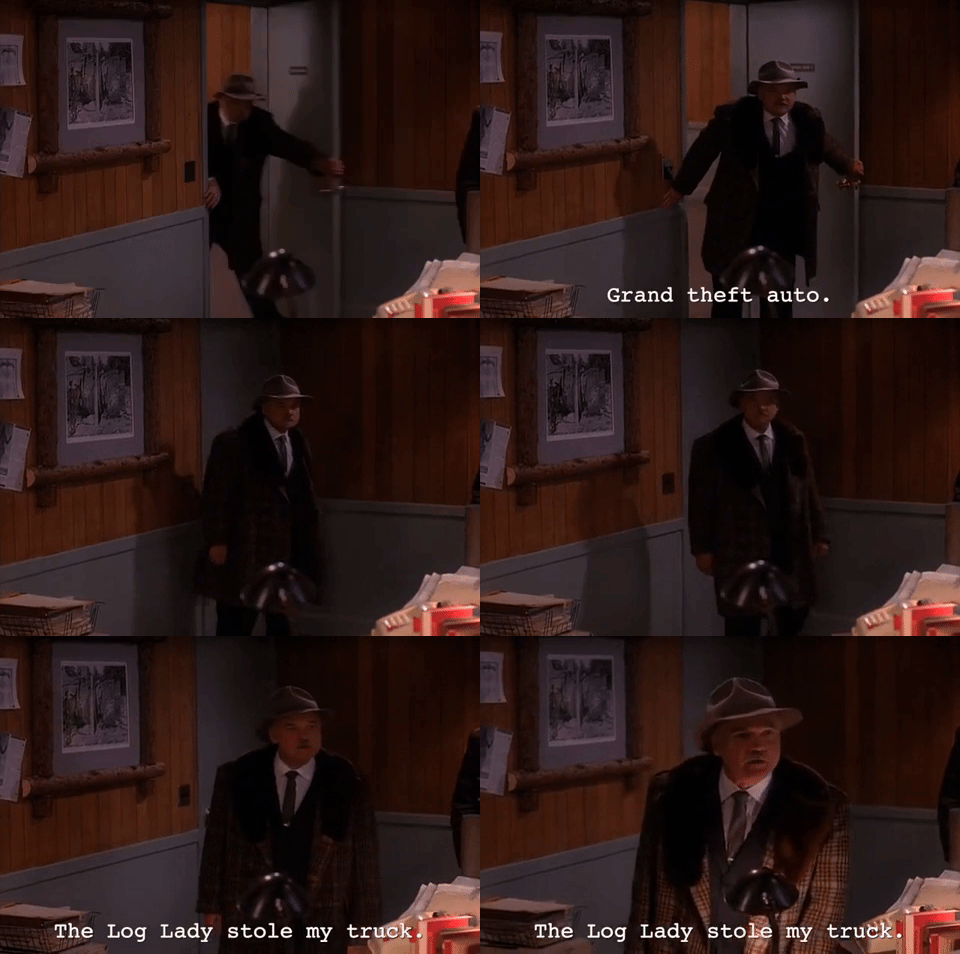
In the contemporary digital landscape, visual content does not merely travel across network infrastructure; it propagates through a highly complex, algorithmically mediated ecosystem designed specifically to capture human attention. At the absolute center of this phenomenon lies the short-form visual loop, best exemplified by the animated GIF and its modern video derivatives. Unlike linear film or long-form video broadcasts that demand sustained cognitive commitment from the viewer, looping micro-animations operate on immediate sensory gratification. The structural architecture of a truly viral meme depends on a delicate synthesis of timing, emotional clarity, and instant recognizability. Within less than three seconds of playback, a successful loop must communicate a narrative premise, deliver an emotional punchline, and reset seamlessly to begin the psychological cycle anew.
Algorithmic recommendation engines deployed across social media platforms prioritize user engagement metrics such as dwell time, re-watch rate, and instant shareability. Looping visual content inherently exploits these algorithmic incentives. Because a seamless GIF automatically replays without requiring explicit viewer intervention, users frequently watch a single three-second loop four or five times while digesting its subtle details or reading accompanying text captions. To the recommendation algorithm, this continuous playback signals extraordinarily high user retention, triggering automated amplification across millions of algorithmic feeds. Consequently, content creators and digital strategists meticulously craft visual loops with hidden background details, intricate micro-expressions, or subtle easter eggs that deliberately encourage repeated viewing.
Beyond technical optimization and algorithmic mechanics, the virality of a visual loop is governed by semiotics—the study of signs, symbols, and meaning creation. A meme succeeds when it abstracts a hyper-specific human experience into a universal visual symbol. When an individual encounters a GIF depicting an overwhelmed character frantically typing on a glowing keyboard, the image functions as a flexible metaphor applicable to workplace stress, academic deadlines, or intense digital gaming sessions. This semiotic versatility allows a single visual asset to be recontextualized millions of times across vastly different cultural communities without losing its core emotional resonance.
Furthermore, the economics of visual meme culture have evolved beyond passive casual sharing into a sophisticated secondary marketplace of cultural capital. Digital communities utilize custom stickers, reaction loops, and branded animated assets to establish group cohesion and subcultural boundary markers. The ability to deploy the exact appropriate GIF within seconds of a breaking news event or online debate serves as proof of digital fluency and cultural alignment. As visual communication platforms continue to integrate generative tools and real-time animation capabilities, the structural architecture of memes will become increasingly dynamic. However, the fundamental psychological principle will remain constant: the human mind is uniquely wired to find comfort, humor, and connection within the rhythmic predictability of an endless visual loop.
Written by Dr. Julian Vance
Cultural Systems & Network Theorist at gifzo.lol. Specializing in internet aesthetics, digital art history, and visual communication.