Accessibility in Motion: Designing Inclusive Web Animations and Respecting Reduced Motion
How to craft dynamic, expressive looping media without triggering vestibular disorders or cognitive overload.


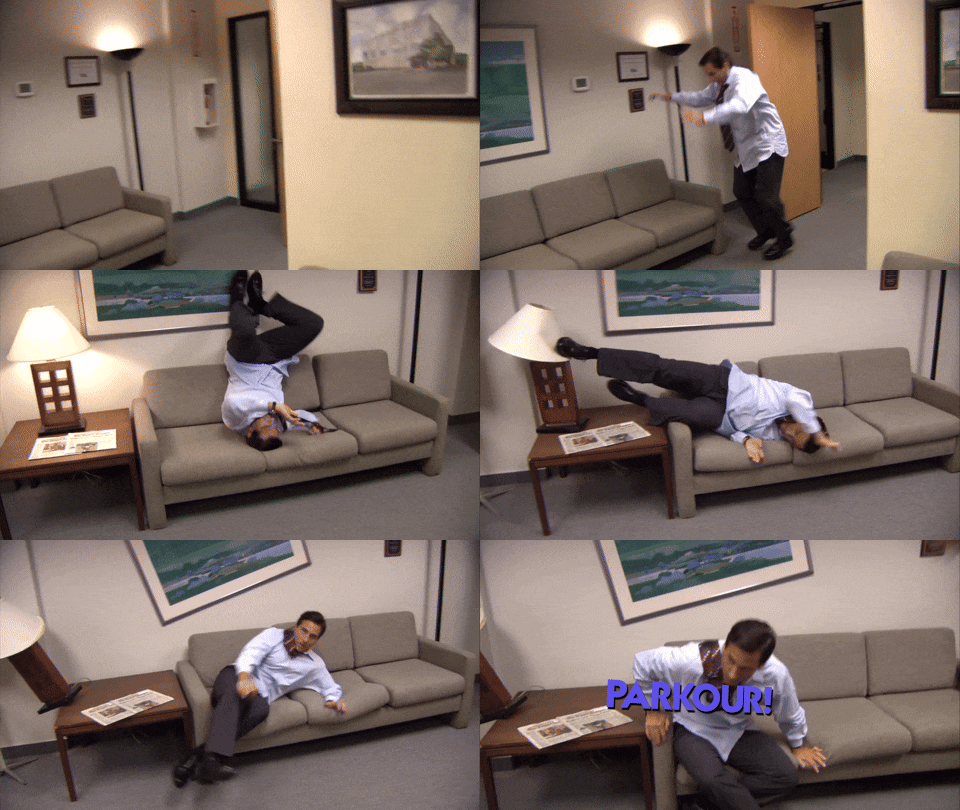
Motion and animation bring web interfaces to life, injecting personality, delight, and intuitive feedback into digital experiences. In visual culture publications like GIFZO, looping animations are the very core of the artistic medium. However, for a significant segment of the global population—including individuals with vestibular disorders, motion sensitivity, migraines, epilepsy, or attention deficit conditions—uncontrolled, auto-playing animations can trigger severe physical symptoms, ranging from dizziness and nausea to complete cognitive disorientation.
Building an inclusive, universally accessible web does not mean stripping away creative animation; it means designing with empathy and giving users agency over their visual environment. The cornerstone of modern motion accessibility is the CSS media query 'prefers-reduced-motion'. Operating as a direct bridge between the browser and the user's operating system preferences, this query signals whether an individual has requested a calmer digital experience. When this flag is enabled, web platforms must provide alternatives: replacing perpetual auto-play with manual click-to-play toggles, substituting aggressive parallax shifts with subtle opacity fades, or displaying a crisp first-frame still poster.
Web Content Accessibility Guidelines (WCAG 2.2) outline clear success criteria for time-based and moving media. Specifically, Criterion 2.2.2 (Pause, Stop, Hide) mandates that any moving, blinking, or scrolling information that starts automatically, lasts more than five seconds, and is presented in parallel with other content must provide a mechanism for the user to pause, stop, or hide it. Furthermore, Criterion 2.3.1 (Three Flashes or Below Threshold) strictly prohibits content that flashes more than three times in any one-second period, safeguarding users against photo-epileptic seizures.
In the context of GIF curation and loop art platforms, responsible UX incorporates several foundational practices: providing descriptive 'alt' text for screen readers that captures the emotional tone and visual action of the loop; ensuring looping media contains clear play/pause controls; and avoiding aggressive high-contrast strobe effects in featured hero carousels. By treating accessibility as a fundamental design constraint rather than an afterthought, motion designers ensure that the joy of visual culture can be experienced safely and comfortably by all internet citizens.
Written by Zoe Sterling
Emerging Tech & Inclusive Design Specialist at gifzo.lol. Specializing in internet aesthetics, digital art history, and visual communication.